Categories
CONFERENCES Taking Nature Black

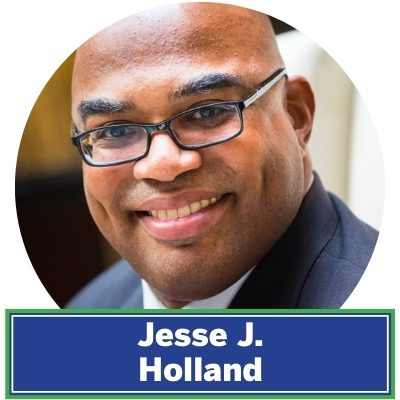
Jesse J. Holland

Jesse J. Holland is the Saturday host of C-SPAN's Washington Journal and an assistant professor of media and public affairs at The George Washington University. He was a longtime political reporter for the Associated Press covering Race & Ethnicity as well as the White House, the Supreme Court and the Congress, as well as state politics in the South and in New York state. He is the editor of the upcoming Black Panther: Tales of Wakanda prose anthology and the author of the Black Panther: Who Is The Black Panther? prose novel, which was nominated for an NAACP Image Award in 2019. Jesse is also the author The Invisibles: The Untold Story of African American Slaves Inside The White House and Black Men Built The Capitol: Discovering African American History In and Around Washington, D.C.

MODERATOR

Jesse J. Holland is the Saturday host of C-SPAN's Washington Journal and an assistant professor of media and public affairs at The George Washington University. He was a longtime political reporter for the Associated Press covering Race & Ethnicity as well as the White House, the Supreme Court and the Congress, as well as state politics in the South and in New York state.

He is the editor of the upcoming Black Panther: Tales of Wakanda prose anthology and the author of the Black Panther: Who Is The Black Panther? prose novel, which was nominated for an NAACP Image Award in 2019. Jesse is also the author The Invisibles: The Untold Story of African American Slaves Inside The White House and Black Men Built The Capitol: Discovering African American History In and Around Washington, D.C.

Categories
CONFERENCES Taking Nature Black

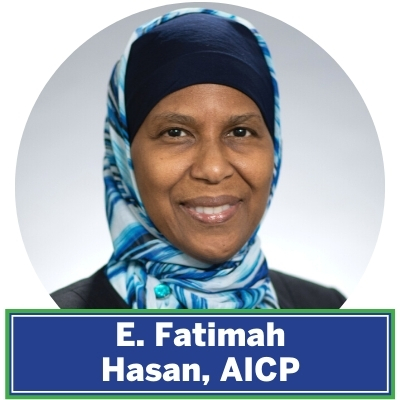
E. Fatimah Hasan

E. Fatimah Hasan is a planner coordinator with the MD-National Capital Park and Planning Commission. Her work focuses on the agricultural preservation program for Prince George’s County, food equity, and green infrastructure elements of the County’s 2017 Resource Conservation Plan. She is partnering with the University of Maryland on projects promoting food equity for residents with limited access to healthy food, and linking farmers producing plants, dyes, or fibers with textile artists who, through their arts and crafts, sustain the culture and economies of communities in the African Diaspora.

MODERATOR

E. Fatimah Hasan is a planner coordinator with the MD-National Capital Park and Planning Commission. Her work focuses on the agricultural preservation program for Prince George’s County, food equity, and green infrastructure elements of the County’s 2017 Resource Conservation Plan.

She is partnering with the University of Maryland on projects promoting food equity for residents with limited access to healthy food, and linking farmers producing plants, dyes, or fibers with textile artists who, through their arts and crafts, sustain the culture and economies of communities in the African Diaspora. She has lent her expertise to bringing women farmers of color together for land conservation learning circles. Her work with the County Council’s Agricultural Resources Advisory Committee, and with urban and rural farmers in the Ujamaa Cooperative Farming Alliance, has inspired her to improve the local food system and community health through closer connections to local farmers and the natural environment.

She holds a Bachelor of Science degree from Howard University, and a Master of City and Regional Planning from the Georgia Institute of Technology.

Categories
CONFERENCES Taking Nature Black

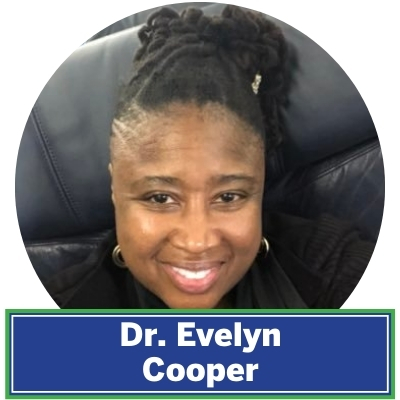
Dr. Evelyn Cooper

Dr. Evelyn E. Cooper became the assistant dean for academic programs the College of Agriculture and Natural Resources at the University of Maryland (UMD) in 2012. In this role, she oversees AGNR’s student support services and serves as the director of retention, diversity, and inclusion initiatives. She has implemented several student programs and initiatives for AGNR and the campus community, including the Summer Opportunities in Agricultural Research and the Environment (SOARE at UMD) and Ag Discovery at UMD, both initiatives geared towards encouraging underrepresented students to pursue agricultural and environmental careers. As an educator and administrator, Dr. Cooper seeks innovative ways to foster a dynamic learning environment and to promote high quality experiences through her leadership.

MODERATOR

Dr. Evelyn E. Cooper became the assistant dean for academic programs the College of Agriculture and Natural Resources at the University of Maryland (UMD) in 2012. In this role, she oversees AGNR’s student support services and serves as the director of retention, diversity, and inclusion initiatives. She has implemented several student programs and initiatives for AGNR and the campus community, including the Summer Opportunities in Agricultural Research and the Environment (SOARE at UMD) and Ag Discovery at UMD, both initiatives geared towards encouraging underrepresented students to pursue agricultural and environmental careers. As an educator and administrator, Dr. Cooper seeks innovative ways to foster a dynamic learning environment and to promote high quality experiences through her leadership.

Dr. Cooper has been involved in university teaching, research, program development, and administration at UMD for more than 25 years. She joined UMD from Grambling State University, where she served as an assistant professor in the Geography, History and Philosophy Department. She earned her Ph.D. and M.S. degree in Geographical Science at UMD and her B.S. degree in Geographical Science with a concentration in Earth Science at North Carolina Central University.

Categories
CONFERENCES Taking Nature Black

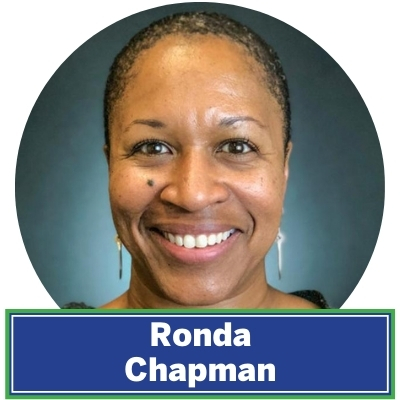
Ronda Chapman

Ronda Chapman is The Trust for Public Land’s first Equity Director, where she leads and advises every aspect of the organization’s Equity strategy. She currently sits on the Boards of Directors for the River Network, Groundwork Richmond, and the Center for Diversity and the Environment. She also holds a position on the National Wildlife Federation’s Women in Conservation Leadership Advisory Council, and is a member of the Green Leadership Trust. She previously served on the Georgetown Climate Center Equity Advisory Committee and was a Commissioner for the DC Commission on Climate and Environmental Justice.

MODERATOR

Ronda Chapman has led a very rich and versatile life in her career and in the outdoors. Born and raised in the Washington, DC metropolitan area, she found her way to the Wasatch Mountains of Utah where she met her first love at the age of 20: snow. She was an avid snowboarder and skier during a period of time when people of color were rarely seen engaging in these activities. She thrived as an athlete and anomaly. Her decade as a “ski bum” shaped her professional career in unanticipated ways. For the last twenty years, Chapman has led efforts on water infrastructure and equity, renewable energy, climate resilience, and waste management in municipal, higher education, and non-profit sectors. She has dedicated her thought leadership towards advancing racial equity, diversity, justice, and inclusion principles in various professional and community-centered capacities. As a skilled facilitator, Chapman derives great joy convening leaders who are committed to the possibilities of equitable communities.

Today, Chapman is The Trust for Public Land’s first Equity Director, where she leads and advises every aspect of the organization’s Equity strategy.

She currently sits on the Boards of Directors for the River Network, Groundwork Richmond, and the Center for Diversity and the Environment. She also holds a position on the National Wildlife Federation’s Women in Conservation Leadership Advisory Council, and is a member of the Green Leadership Trust. She previously served on the Georgetown Climate Center Equity Advisory Committee and was a Commissioner for the DC Commission on Climate and Environmental Justice.

Categories
CONFERENCES Taking Nature Black

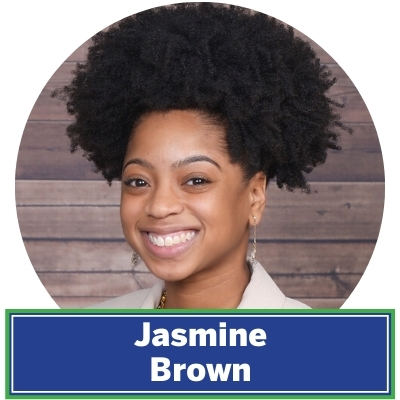
Jasmine Brown

Jasmine K. Brown is a forestry doctoral student at Michigan State University, an interdisciplinary scholar, and social scientist. Her research interests include racial and gender diversity in natural resources, but more specifically, the enduring history of African Americans in forests and forestry. Brown serves as a Steering Committee member for the Women’s Forest Congress. She is also an active member of the Society of American Foresters Diversity and Inclusion Working Group, and MANRRS (Minorities in Agriculture, Natural Resources and Related Sciences).

MODERATOR

Jasmine K. Brown is a forestry doctoral student at Michigan State University, an interdisciplinary scholar, and social scientist. Her research interests include racial and gender diversity in natural resources, but more specifically, the enduring history of African Americans in forests and forestry. Brown serves as a Steering Committee member for the Women’s Forest Congress. She is also an active member of the Society of American Foresters Diversity and Inclusion Working Group, and MANRRS (Minorities in Agriculture, Natural Resources and Related Sciences).

Brown previously worked with the U.S. Forest Service as a traveling Forestry Technician and Pathways Intern. Brown holds a Bachelor’s degree in Natural Resources from the University of Connecticut and a Master’s degree in Forest Ecosystems and Society from Oregon State University.

Categories
CONFERENCES Taking Nature Black

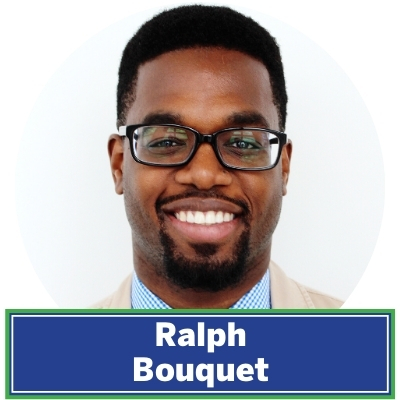
Ralph Bouquet

Ralph Bouquet is the Director of Education and Outreach for NOVA, the PBS science documentary series produced by GBH Boston. At NOVA, Bouquet and his team support science educators through the creation of free classroom resources and engage new audiences for NOVA’s broadcast and digital productions through inclusive science communication events around the country. Their newest initiative, the NOVA Science Studio, is a youth science communication program that empowers young people to produce short-form videos about the issues that matter to them.

MODERATOR

Ralph Bouquet is the Director of Education and Outreach for NOVA, the PBS science documentary series produced by GBH Boston. At NOVA, Bouquet and his team support science educators through the creation of free classroom resources and engage new audiences for NOVA’s broadcast and digital productions through inclusive science communication events around the country. Their newest initiative, the NOVA Science Studio, is a youth science communication program that empowers young people to produce short-form videos about the issues that matter to them.

Before NOVA, Bouquet taught high school biology and chemistry in Philadelphia and worked in ed-tech at a Boston-based startup. He earned his B.A. at Harvard University.

Categories
CONFERENCES Taking Nature Black

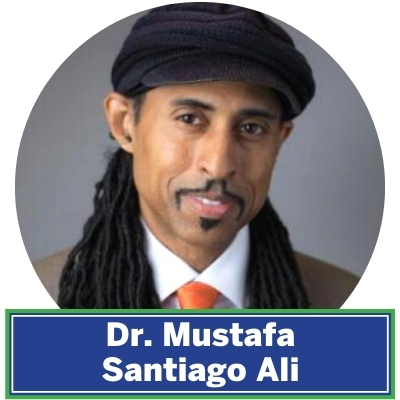
Dr. Mustafa Santiago Ali

Dr. Mustafa Santiago Ali serves as the Vice President of Environmental Justice, Climate, and Community Revitalization for the National Wildlife Federation. He is also the founder of Revitalization Strategies, a business focused on moving our most vulnerable communities from “surviving to thriving.”

MODERATOR

A renowned thought leader, international speaker, policy maker, community liaison, trainer, and facilitator, Dr. Mustafa Santiago Ali serves as the Vice President of Environmental Justice, Climate, and Community Revitalization for the National Wildlife Federation. He is also the founder of Revitalization Strategies, a business focused on moving our most vulnerable communities from “surviving to thriving.”

Before joining the National Wildlife Federation, Mustafa was the senior vice president for the Hip Hop Caucus, a national non-profit and non-partisan organization that connects the hip-hop community to the civic process to build power and create positive change. In his role, he led the strategic direction, expansion, and operation of the Hip Hop Caucus’ portfolio on climate, environmental justice, and community revitalization.

Prior to joining the Hip Hop Caucus, Mustafa worked for 24 years at the U.S. Environmental Protection Agency (EPA). He began working on social justice issues at the age of 16 and joined the EPA as a student, becoming a founding member of the EPA’s Office of Environmental Justice (OEJ). He most recently served as senior advisor for environmental justice and community revitalization and assistant associate administrator, working to elevate environmental justice issues and strengthening environmental justice policies, programs, and initiatives. Mustafa worked for EPA administrators beginning with William Riley and ending with Scott Pruitt.

Mustafa uses a holistic approach to revitalizing vulnerable communities, and has worked with more than 500 domestic and international communities to secure environmental, health, and economic justice. Throughout his career, Mustafa has conducted more than 1,000 presentations across the country, including speeches, training, and guest lectures at over 100 colleges and universities. He is a former instructor at West Virginia University and Stanford University.

Mustafa currently serves as a board member for Robert Wood Johnson Foundation, Union of Concerned Scientists, Rodenberry Foundation, TREE, and Climate Hawks Vote. He is frequently seen on television, including appearances on MSNBC, CNN, VICE, BET, Full Frontal with Samantha Bee, and Democracy NOW! Mustafa is also a regular guest on WURD radio, Roland Martin Unfiltered, The Dean Obeidallah Show, and many others, and is the former co-host of the live radio show and podcast Think 100%: The Coolest Show on Climate Change with Grammy-nominated singer and actress Antonique Smith and civil rights icon Rev Lennox Yearwood. In 2020, he was named a Taking Nature Black National Environmental Champion.

Categories
CONFERENCES Taking Nature Black

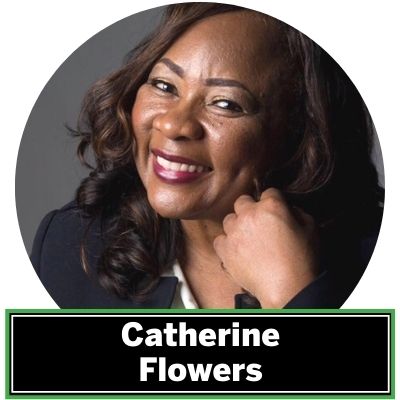
Catherine Flowers

Catherine C. Flowers is an environmental activist bringing attention to the largely invisible problem of inadequate waste and water sanitation infrastructure in rural communities in the United States. As founding director of the Center for Rural Enterprise and Environmental Justice (formerly the Alabama Center for Rural Enterprise), Flowers builds partnerships across social scales—from close neighbors, to local elected officials and regional nonprofits, to federal lawmakers and global organizations—to identify and implement solutions to the intersecting challenges of water and sanitation infrastructure, public health, and economic development.

KEYNOTE SPEAKER

Catherine C. Flowers is an environmental activist bringing attention to the largely invisible problem of inadequate waste and water sanitation infrastructure in rural communities in the United States. As founding director of the Center for Rural Enterprise and Environmental Justice (formerly the Alabama Center for Rural Enterprise), Flowers builds partnerships across social scales—from close neighbors, to local elected officials and regional nonprofits, to federal lawmakers and global organizations—to identify and implement solutions to the intersecting challenges of water and sanitation infrastructure, public health, and economic development.

Flowers grew up in Lowndes County, Alabama, an area plagued by poverty and failing infrastructure, which often results in raw sewage in yards and waterways and contaminated drinking water for residents. With a deep understanding of the historical, political, economic, and physical constraints that impede the implementation of better infrastructure in the region, she has engaged collaborators across a broad range of disciplinary expertise to document how lack of access to sufficient and sustained waste treatment and clean water can trap rural, predominantly African American populations in a vicious cycle of poverty and disease.

In 2011, Flowers worked with the UN Special Rapporteur to uncover the startling level of poverty in Lowndes County and the southern United States more broadly. With the Columbia University Law School Human Rights Clinic and Institute for the Study of Human Rights, she published “Flushed and Forgotten: Sanitation and Wastewater in Rural Communities in the United States” (2019), an examination of inequalities in access to sanitation and clean water within a framework of human rights. The report exposes the extent of water contamination and sanitation problems in poor, rural communities across the country, largely due to neglect by local leaders.

Flowers also spearheaded a collaboration with tropical disease researchers focused on intestinal parasitic infections spread by way of insufficient water treatment and waste sanitation. The researchers found that hookworm, long thought to have been eliminated from the South, is in fact prevalent among the residents of Lowndes County, prompting the U.S. Centers for Disease Control to undertake a similar, larger study across the rural American South. Flowers’s testimony to the U.S. Congress led to the introduction of legislation in 2019 to address neglected diseases of poverty in the United States.

Flowers is broadening the scope of environmental justice to include issues specific to disenfranchised rural communities and galvanizing policy and research to redress failing infrastructure that perpetuates socioeconomic disparities in rural areas across the United States.

Flowers is also the rural development manager for the Equal Justice Initiative, a member of the board of directors of the Climate Reality Project, and a senior fellow for the Center for Earth Ethics at Union Theological Seminary. Previously, Flowers has worked as a high school teacher in Detroit, Michigan, and Washington, D.C. She has published articles in Anglican Theological Review, Columbia Human Rights Law Review, and American Society of Tropical Medicine and Hygiene, among others, and her new book, Waste: One Woman’s Fight Against America’s Dirty Secret, which was published in November 2020.

Categories
Uncategorized

TNB Statement

NEWS ALERT

Statement from Lisa Alexander, Executive Director of the Audubon Naturalist Society,
and Caroline Brewer, Chairwoman of the Taking Nature Black Conference:

For Immediate Release: February 16, 2021
For more information, contact Caroline Brewer, caroline.brewer@anshome.org or 301-652-9188, ext. 23

Due to the serious and criminal allegations of sexual assault that have arisen against a birder and panelist for the upcoming Taking Nature Black Conference, the Audubon Naturalist Society has rescinded its invitation to him to participate in the conference.

###

Follow ANS at: www.Facebook.com/AudubonNaturalistSociety,  www.Twitter.com/ANStweet 
and @ANSNature on Instagram.

 About ANS: Throughout its history, ANS has championed nature for all by playing a pivotal role in conserving our region's iconic natural places from development including the C&O Canal, Dyke Marsh and, most recently, Ten Mile Creek. Past ANS member and board president, Rachel Carson, author of Silent Spring, is credited with launching the now global environmental movement. ANS's nature experts provide hundreds of opportunities each year for children and adults to enjoy, learn about, and protect the environment.

Categories
CONFERENCES NEWS ALERT Taking Nature Black

Black Environmentalists to Share Joy and Pain

NEWS ALERT

Black Environmentalists to Share Joy and Pain that Open Spaces and Their Jobs Bring

Taking Nature Black Virtual to Draw Highest Attendance
Runs Tuesday, February 23 – Saturday, February 27, 2021

For Immediate Release February 11, 2021

For more information, contact Conference Chairwoman and ANS Director of Marketing and Communications Caroline Brewer, caroline.brewer@anshome.org or 240-899-9019, or Media Outreach Specialist lglisagoodnight@gmail.com or 301-523-5394

CHEVY CHASE, MDTykee James, board member of the DC Audubon Society, is especially conscious of how he dresses before he goes out birding in the wilderness. As a Black man entering wild (also known as “white”) spaces, he recognizes that each trip could be his last.  So before he indulges himself in the beauty of birdsong, he contacts friends to tell them what he’s wearing so that, if necessary, they can help authorities find his missing body. “Going outside is an opportunity for racism. I can’t get too comfortable,” James says.

When doctoral forestry student Jasmine K. Brown first invited her father to go on a hiking trip in the woods, he was elated. As they followed trail markers and took father-daughter selfies, he became overwhelmed by discomfort, fear, and a reluctance to keep going. He explained that the history of African American victimization in the woods was haunting him. Brown was able to help her father re-imagine forests as a healing space, which allowed them to finish the hike.

For Blacks environmentalists, as for most people, parks, woods, and other open spaces are places to play, explore, rejuvenate and refresh. But the great outdoors can also be unwelcoming and even traumatic for Blacks (as we saw in the Central Park attack last year), and so can being a rare person of color in their fields. The Taking Nature Black® Conference is a place where audiences Black, white, Asian, Latinx, and Native American flock to hear stories like James’ and Brown’s --raw, unvarnished tales of what it’s like to be Black in green spaces and hold jobs as environmentalists. Black birders, foresters, waterkeepers, urban gardeners, park staff, and others who go hard at green careers, tell their stories of joy, pain, tragedy and triumph as if they are in the comfort of a friend’s living room. Because, to them, they are.

And when they tell the stories only they can tell, they, literally, breathe easier. This is why participation in Taking Nature Black has soared since the first conference to 700 this year from 100 in 2016.  “I get to be my full Black self (here),”  teen climate activist Jerome Foster II, who was later featured in the Washington Postand New Yorker Magazine, proudly and emotionally boasted to the 2020 audience during his acceptance speech as the Youth Environmental Champion.

A 2018 participant wrote, “I’ve spent much of my 19-year career in environmental conservation trying not to highlight my Blackness... This conference has made me feel so proud to be a part of a community of Black environmentalists. Thank you…I loved this conference!” 

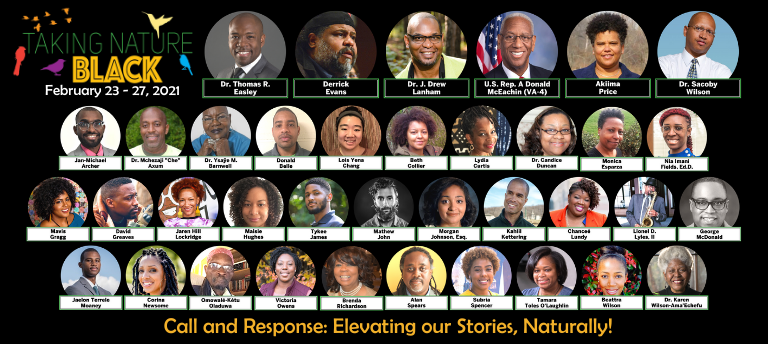
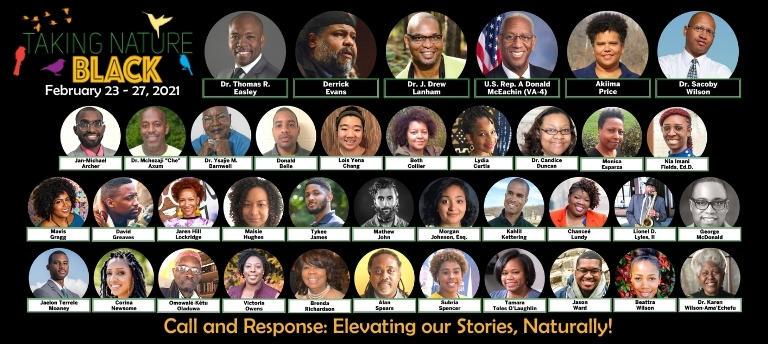
The virtual Conference runs Tuesday February 23 – Saturday, February 27, 2021. Interviews can be arranged with many of the 50 speakers, panelists, performers and artists. Click here for the Conference Agenda, Speaker and Panel Descriptions.

###

Follow ANS at: www.Facebook.com/AudubonNaturalistSociety,  www.Twitter.com/ANStweet 
and @ANSNature on Instagram.

 About ANS: Throughout its history, ANS has championed nature for all by playing a pivotal role in conserving our region's iconic natural places from development including the C&O Canal, Dyke Marsh and, most recently, Ten Mile Creek. Past ANS member and board president, Rachel Carson, author of Silent Spring, is credited with launching the now global environmental movement. ANS's nature experts provide hundreds of opportunities each year for children and adults to enjoy, learn about, and protect the environment.